Can You Watch 3D Without Glasses? Movies, TVs and What Works
How we researched this: written by Owl3D from published sources, all 32 listed at the end.
Short answer
In a movie theater, no: RealD 3D, IMAX 3D and Dolby 3D all need glasses. At home, yes: glasses-free 3D monitors show 3D to the naked eye, and a VR headset shows it without 3D glasses, though you wear the headset instead.
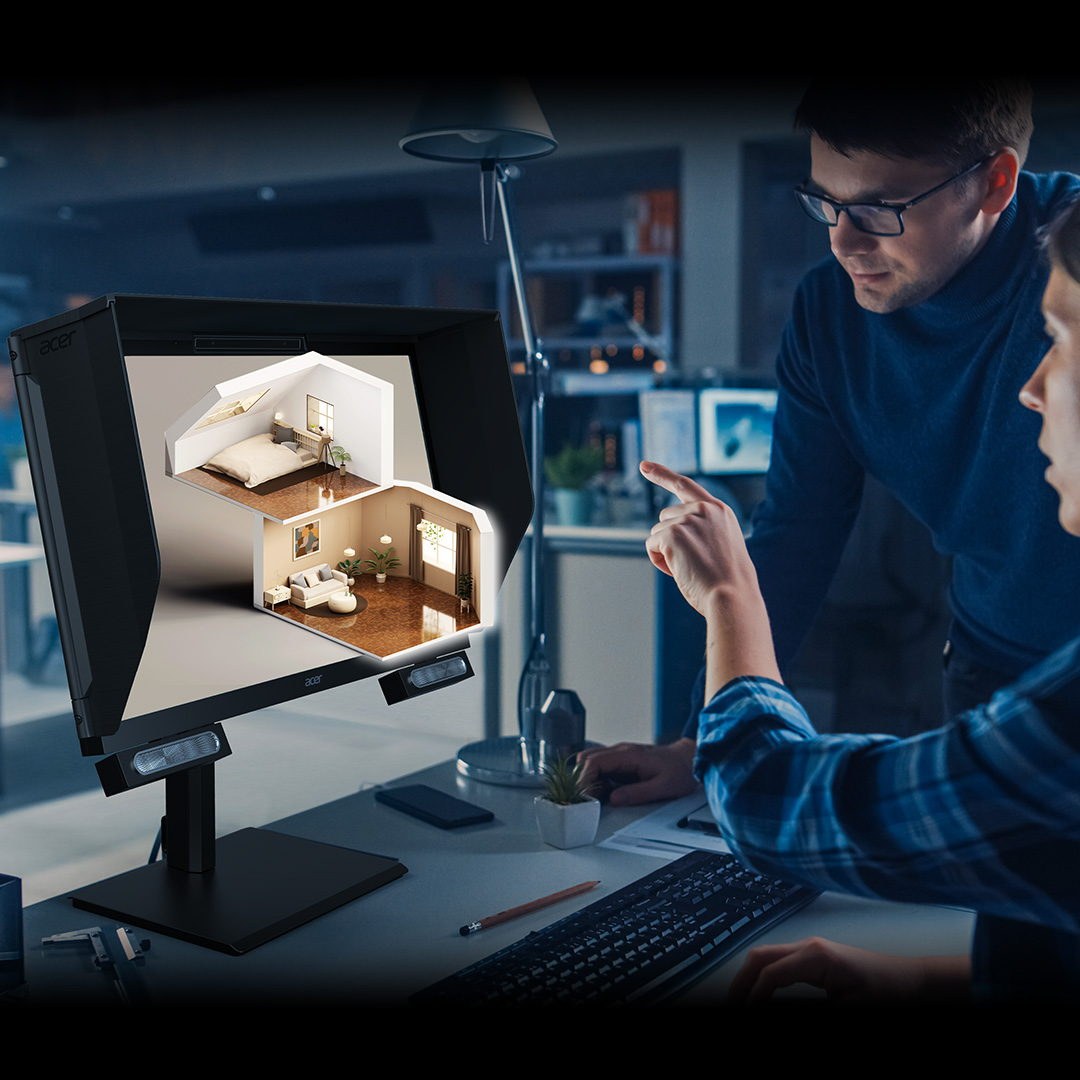
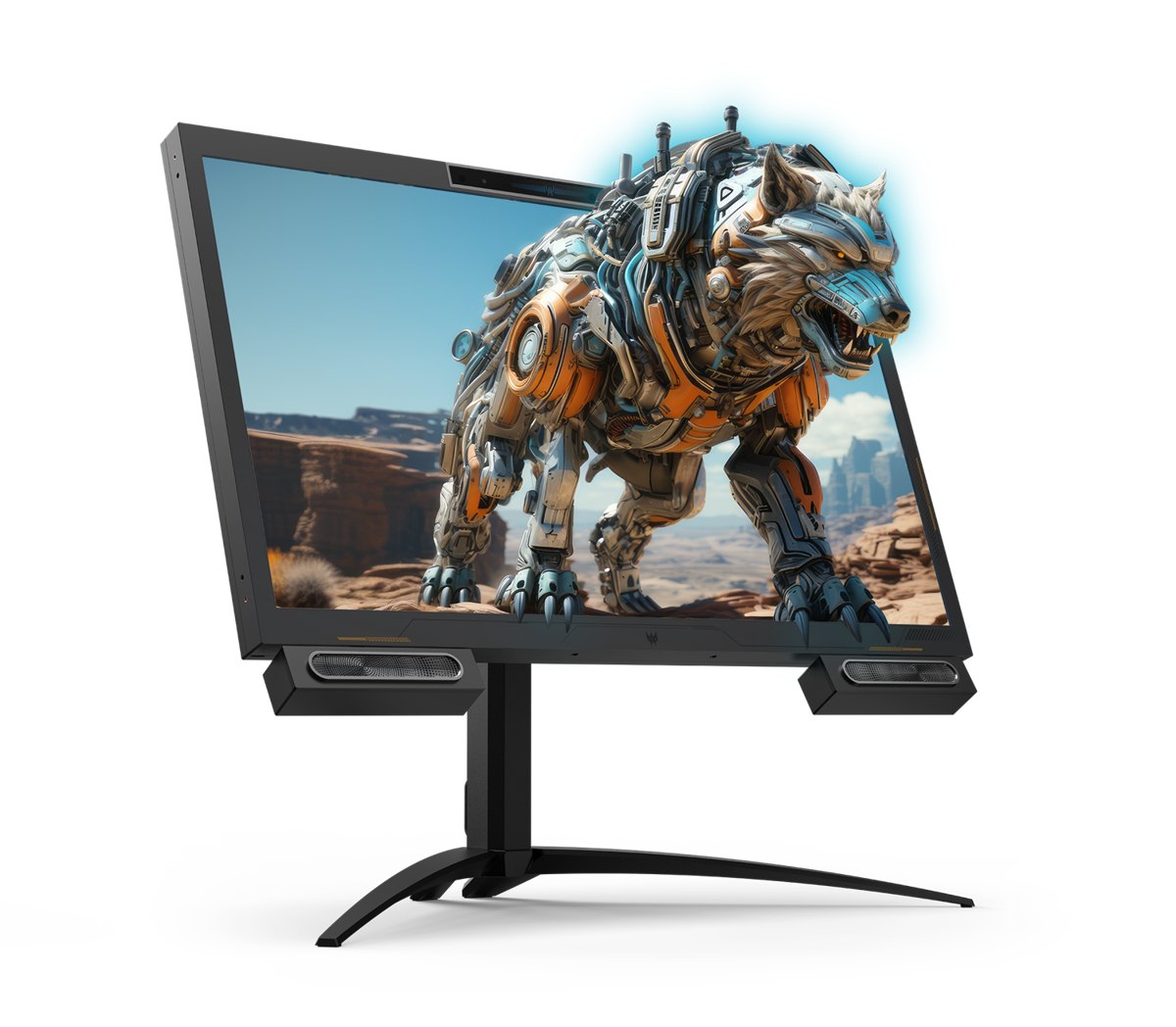
3D without glasses, on a glasses-free 3D monitor: nobody here wears 3D glasses. This is Acer's publicity picture for its SpatialLabs View Pro 27, and the house standing out of the screen is Acer's rendering of the effect. Image: Acer.
Key takeaways
- At home, six ways work, from free-viewing at no cost to a headset; see the ways compared.
- No major TV brand sells a 3D TV without glasses as of October 2026, and the large glasses-free screens on sale are built to order, at about $6,000 for a 55-inch; see 3D TVs without glasses.
- A theater puts both eyes' pictures on one screen and needs glasses to separate them; see theaters.
- For a movie, three routes work today: a headset, a 3D file on a glasses-free monitor, or a 2D film converted as it plays; see how to watch one.
- For the third route, the Owl3D Shift, a glasses-free desk display, turns any video playing on the PC into 3D instantly, including a disc or a streaming site in a browser. It is an AI conversion, not the studio's 3D version, and it needs a capable computer; see route 3.
Quick picks
- Studio 3D filmsa VR or mixed-reality headset; see route 1
- A 3D file you already havea glasses-free 3D monitor; see route 2
- A 2D film, disc or stream you can already play on a PCa glasses-free monitor that converts it to 3D instantly, as it plays; see route 3
- A large shared picturea 3D projector, with glasses
- No device at allfree-viewing
Ways to see 3D without glasses at home
Six ways work at home. They differ in price, in what they play and in who sees the 3D.
| Way | Examples and prices | Who sees the 3D | Good to know |
|---|---|---|---|
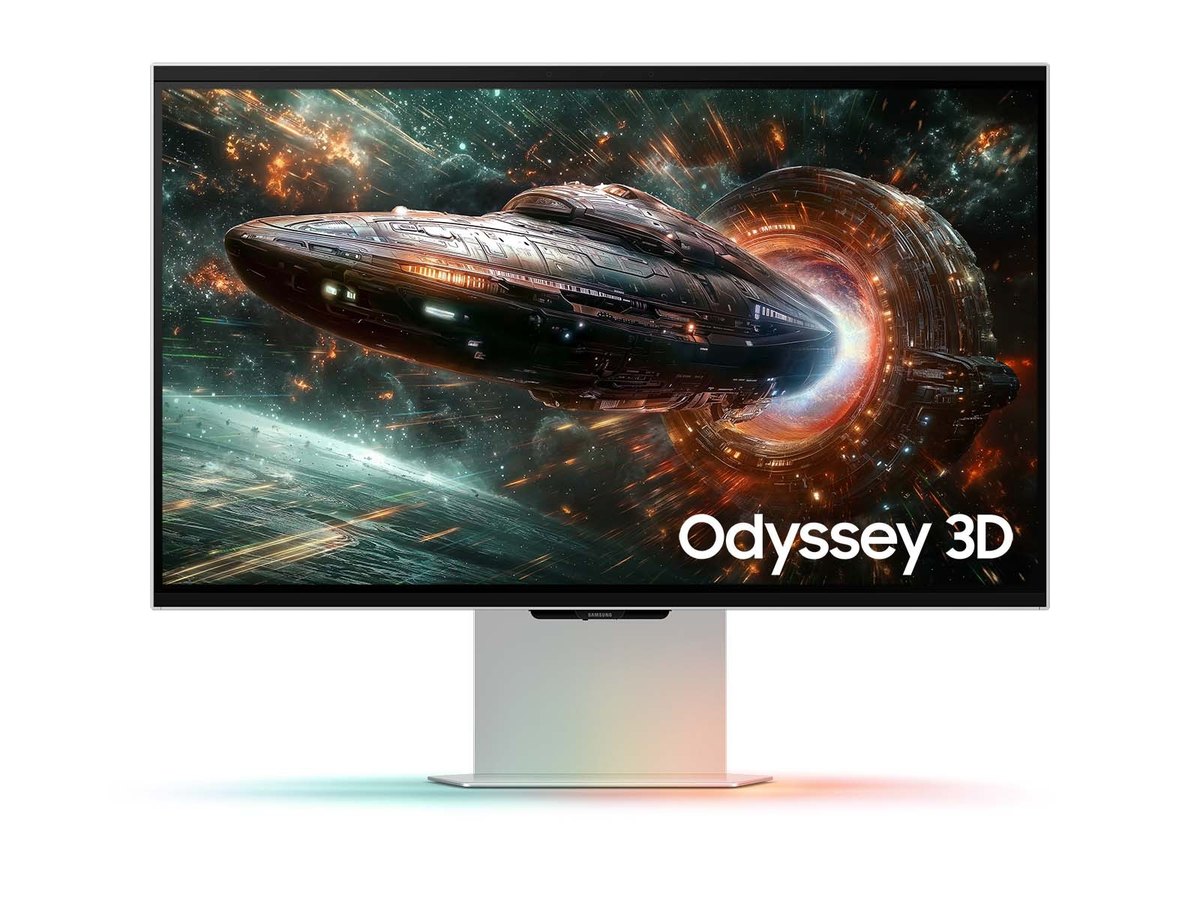
| Glasses-free 3D monitor | Owl3D Shift, 14-inch, $499; Samsung Odyssey 3D G90XF, 27-inch, $1,399.99 at samsung.com [5]; Acer Predator SpatialLabs View 27, from $1,799.99 at Amazon [16] | One person at a time on models that track your eyes [3] | Needs a computer |
| VR or mixed-reality headset | Meta Quest 3S from $349.99; Meta Quest 3, $599.99 [17]; Apple Vision Pro from $3,499 [18] | The wearer | No 3D glasses, but you wear a headset; the route with studio 3D films |
| Small desk display with many views | Looking Glass Go, 6-inch, $199 (regular $299), or $248 with a transparent case [19] | Several people at once [19] | Can run without a computer [19] |
| Large glasses-free 3D display | Built to order by a specialist seller [1] | Several people at once [1] | Prices and limits are in the TV section |
| Free-viewing | Any side-by-side 3D picture | You | Free; takes practice; suits small still images |
| Nintendo 3DS | Made from 2011 to 2020 [20] | The person holding it | Discontinued |
Last checked : prices, from the listings cited.
Glasses-free 3D monitors
A lens layer on the panel sends a different picture to each eye, and on most current models a camera tracks your eyes to keep the pictures aimed [3]. See glasses-free 3D monitors compared for each model and what a lenticular lens is for the optics.
Owl3D, the publisher of this guide, makes the Shift. It is a 14-inch glasses-free 3D display that sits beside a computer as a second monitor.
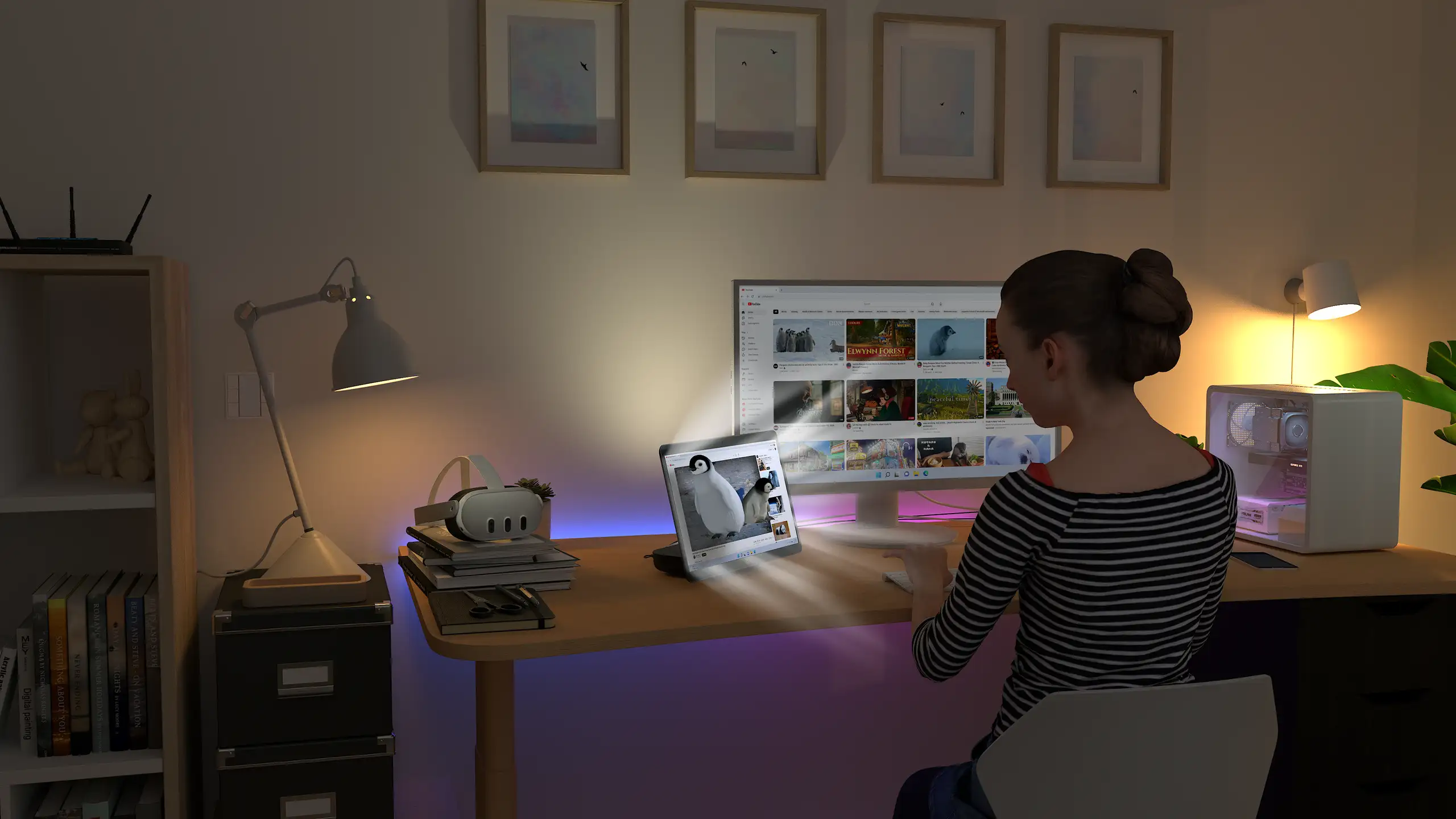
- Who sees the 3D. One viewer at a time. When several people take turns, it automatically finds the person who should be seeing the 3D and shows it to them.
- What it needs to convert 2D to 3D as it plays. A Windows PC with an NVIDIA RTX 30-series graphics card or newer, or a Mac with Apple silicon (M1 Pro or better recommended) and macOS 15.5 or later. AMD graphics cards are not supported for conversion.
- Its limits. It is not a TV, and it does not work on its own or with a game console or disc player plugged in directly. At 14 inches it is a desk display, and in 3D each eye sees 1920 x 2160, half the panel's horizontal resolution.
What it plays, and how, is under how to watch a 3D movie without glasses at home.
Laptops and tablets
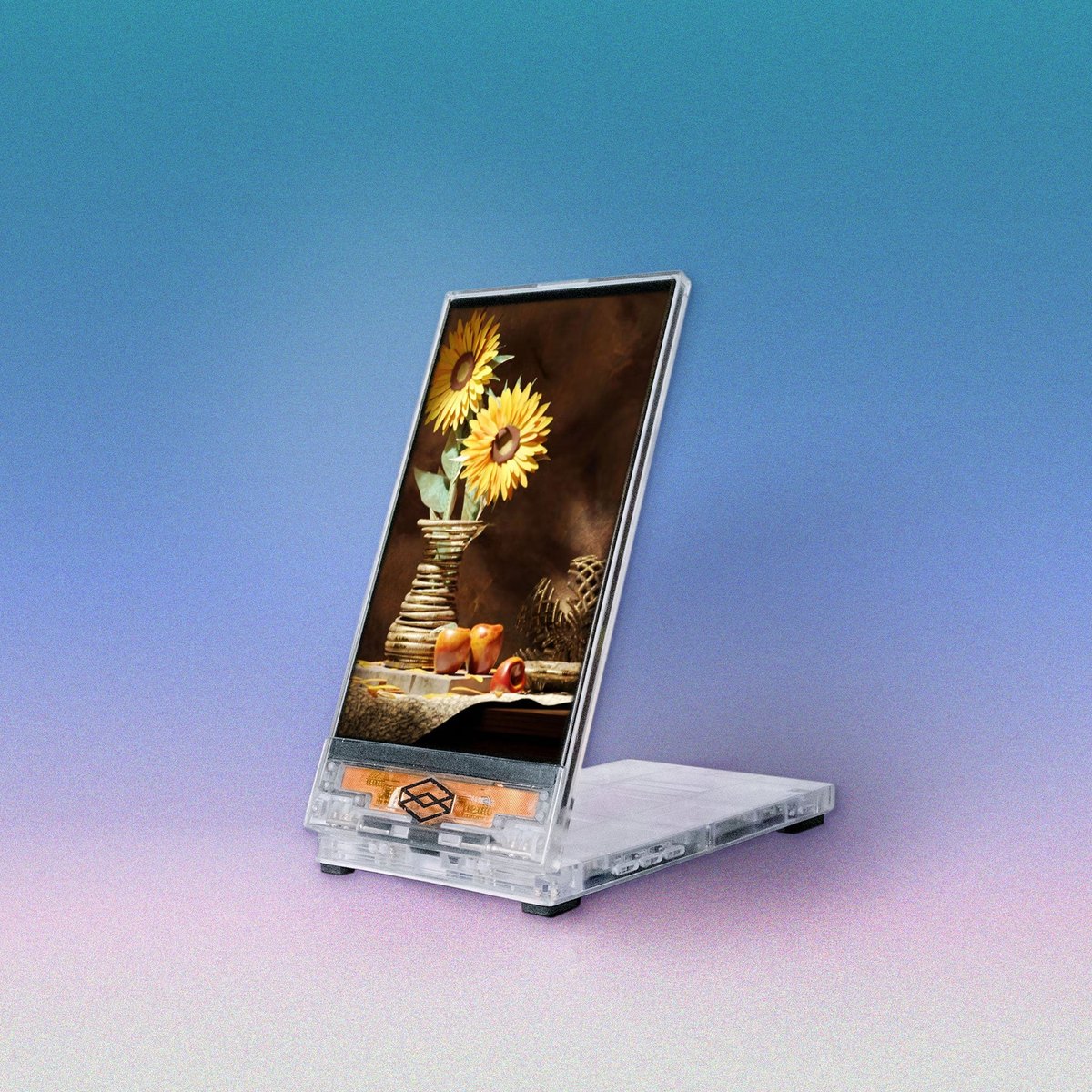
Portable versions exist: two laptops and a tablet.
Three glasses-free 3D laptops and tablets, with announced prices
The prices are from announcements and reviews, not current listings.
- Lenovo Legion 9i. Announced in May 2025 as an 18-inch laptop with an optional eye-tracked 3D screen [21].
- Acer Aspire 3D 15 SpatialLabs Edition. A laptop announced in January 2024, from $1,399.99 [22].
- ZTE Nubia Pad 3D. A tablet, also sold as the Leia Lume Pad 2, that was $1,199 when Tech Advisor reviewed it in 2023 [23].
Free-viewing: no device at all
An ordinary screen sends the same picture to both eyes, so by itself it cannot show 3D. Free-viewing gets around that: you look at two pictures placed side by side and let your eyes merge them.
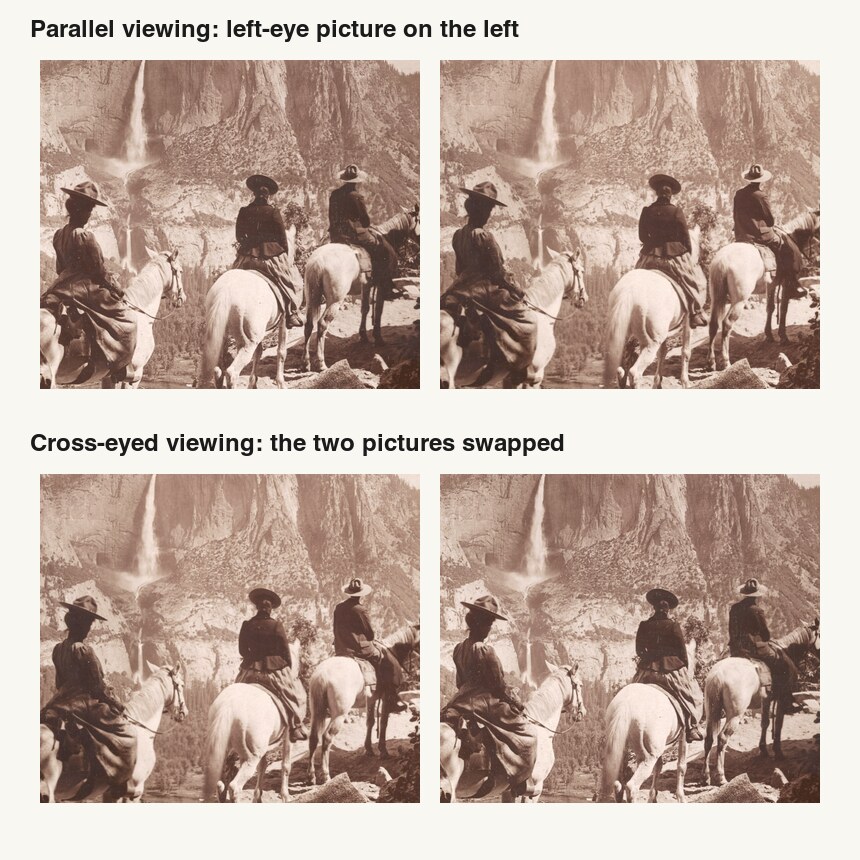
- Parallel viewing. The left-eye picture is on the left, and you look "through" the screen until the two slide together. It is comfortable only when the pictures are no wider apart than your eyes, about 63 mm on average [24].
- Cross-eyed viewing. The pictures are swapped and you cross your eyes slightly. It is usually easier for beginners [24].
It works for still 3D photos and, with practice, a small side-by-side 3D video. Red-and-blue 3D does need glasses; see anaglyph 3D.
Is there a 3D TV without glasses you can buy?
Not from a major TV brand, as of October 2026. What exists is a made-to-order product from a specialist, and prototypes from the brands.
What is sold
Tridimensional, an online shop that specializes in 3D devices, lists the ProMa Art glasses-free 3D display in six sizes from 28 to 98 inches. On October 7, 2026 the 55-inch was $5,995 and the 65-inch $6,999 [1].
Last checked : the shop's listing and prices.
A YouTube reviewer bought and reviewed a 55-inch 4K glasses-free 3D TV from the same ProMa brand in 2024 [4]. We have not tested one. Treat it as a large 3D display for an enthusiast or a business, not a TV you pick up at a store.
The made-to-order display in detail: lead time, inputs and who it is for, and what we could not confirm
- Each one is "individually manufactured to order", with up to four weeks for production and dispatch [1].
- The shop describes it as multiview and says its multiview sets need no eye tracking, meaning no camera that follows one viewer's eyes [1][2]. A screen of this kind sends out several views at once, so several people can see the 3D [3].
- It takes 3D from a 3D Blu-ray player, a PC or a USB drive [1].
- The shop lists it under professional products, for "professional and commercial installations" such as exhibitions and store displays [1], and has said the cost is "significantly higher than regular TVs" [2].
What the big brands have
| Brand | What it has shown or sells | A glasses-free 3D TV for sale? |
|---|---|---|
| Samsung | A glasses-free 3D monitor, the 27-inch Odyssey 3D G90XF [5] | No: "no word yet on 3D TVs" [6] |
| TCL | A 65-inch 8K glasses-free prototype at CES, January 2026 [7]; a 32-inch glasses-free display from its panel division at IFA in September [8] | No TV for sale announced [8] |
| Visual Semiconductor | A 65-inch 8K glasses-free set at the same CES [7]; a TV announced in August 2026 with two partners [9] | Availability and pricing "expected to be announced in the future" [9] |
TechRadar's reviewer, who saw both CES sets and liked them, still wrote: "I don't think 3D TVs are coming back to the home any time soon" [7].
Notes on the three brands: Samsung's research, TCL's second panel and Visual Semiconductor's claim
- Samsung. The quotation is from FlatpanelsHD, reporting in April 2026 on Samsung research into a lens that switches between 2D and glasses-free 3D [6].
- TCL. At IFA its panel division also showed a 65-inch panel that is 8K in 2D and 4K in 3D, without saying whether that one needs glasses [8].
- Visual Semiconductor. It and its partners say the announced TV shows 3D to everyone in the room without eye tracking [9].
Why a living room is the hard case
Several people sit in different seats, and each kind of glasses-free screen has a catch there.
| Kind of screen | Serves | The catch |
|---|---|---|
| Tracks eyes | One viewer | That method "is not favored for consumer products" [3] |
| Sends out many views | More people | Gives up resolution [3] |
Two illustrations: Toshiba's 2011 glasses-free TV, and where people put their chairs
One example of the resolution given up: the 55-inch glasses-free TV that Toshiba launched in Japan in December 2011, at about $11,700, had a 3,840 x 2,160 panel and showed 3D at 1,280 x 720 [10].
Viewers also have to sit where the views line up. As Michael Bove of MIT told IEEE Spectrum, "People want to put chairs where they're comfortable, not necessarily where the right view zones are" [11].
For a large shared 3D picture today, the practical choice is a 3D projector, with glasses.
Can you watch a 3D movie in a theater without glasses?
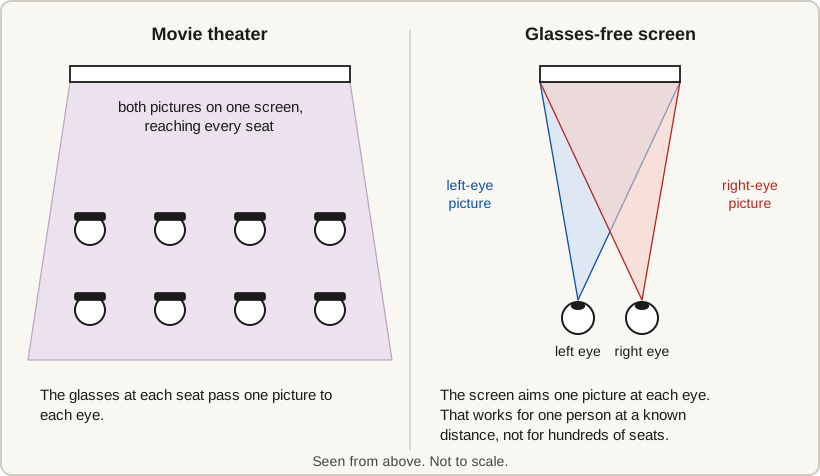
No. A 3D film is two pictures, one for each eye, and a theater shows both on one screen (see the diagram at the top). The glasses do the sorting.
A screen that sorts the pictures itself has to aim them at each viewer's eyes. That works for one person at a known distance, not for hundreds of seats. MIT researchers built a glasses-free movie screen in 2016, but the prototype was "just barely larger than a pad of paper" and, they said, not ready for market [15].
How RealD 3D, IMAX 3D and Dolby 3D each use the glasses
- RealD 3D. One projector alternates left-eye and right-eye frames 144 times a second and gives the two sets opposite polarization, a property of light that a filter can pass or block. Each lens passes only its own eye's frames [12].
- IMAX 3D. Glasses again, for example pairs with polarizing filters matched to filters on the projectors [13].
- Dolby 3D. The two pictures are separated by color, and the glasses carry color filters [14].
For how the theater systems differ, see RealD vs IMAX 3D vs Dolby 3D and types of 3D glasses.
How to watch a 3D movie without glasses at home
Three routes work today.
Route 1: a headset
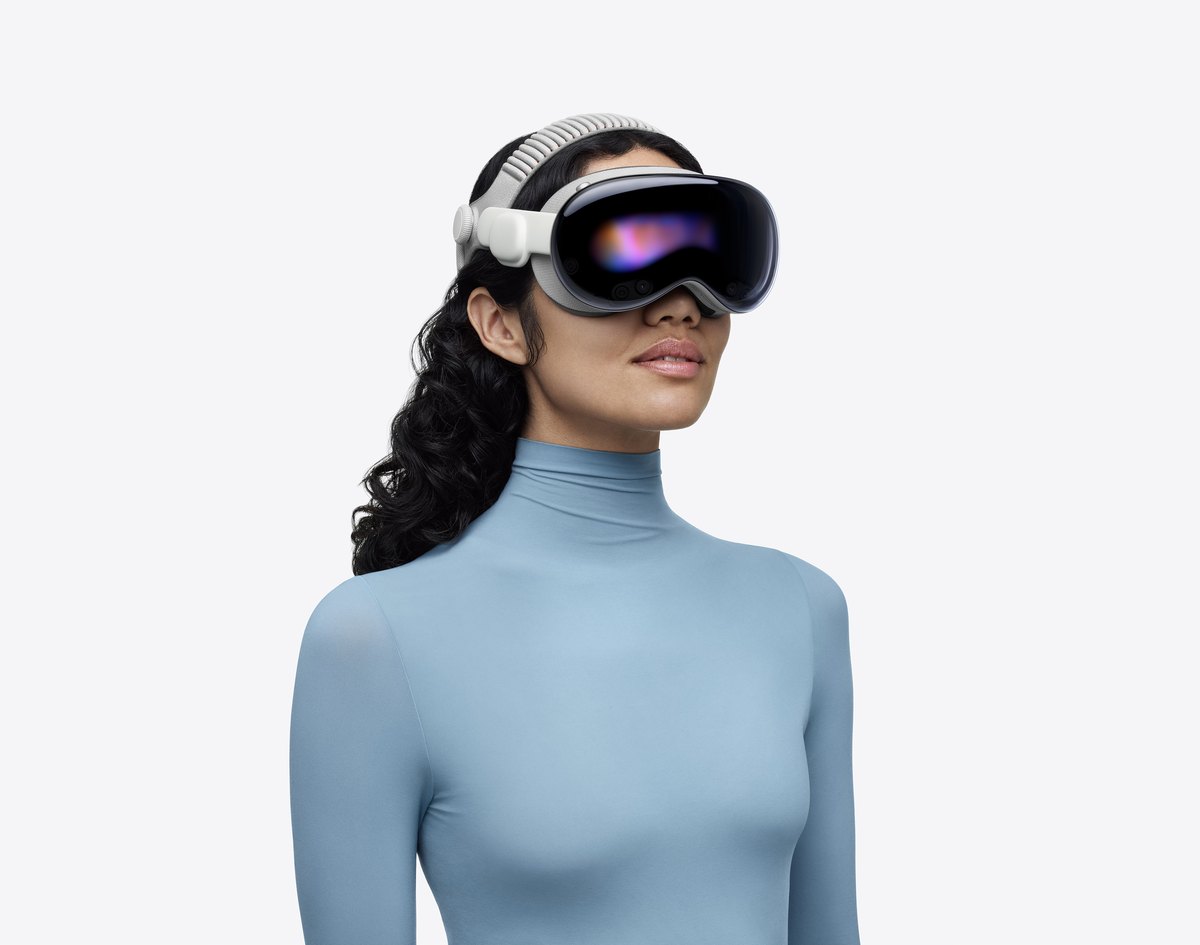
Each eye gets its own screen, so nothing has to be sorted. Apple says the Apple TV app on Vision Pro is home to "one of the largest digital collections of" 3D movies [18].
On Meta's headsets, studio 3D films are announced, and the Disney+ ones had not started as of October 7. On September 23, 2026, Meta announced three things [25]:
- Disney+. Subscribers "can start streaming movies like Marvel's The Avengers, Marvel Studios' Black Panther, and more in 3D in select countries" in November.
- Peacock, HBO Max and Paramount+. They "are also offering their 3D media catalogs for the very first time". The post gives no titles and no date.
- A movie store. "you'll be able to rent or buy hundreds of movies later this year on Meta Quest in the US", in 2D and 3D.
The same post introduced Meta VR Glasses, a new device on sale in spring 2027 at $1,299.99 [25]. The Disney+ and three-services sentences sit in the part of the post about Meta VR Glasses and name no other headset. The post does not say whether Meta Quest headsets get the Disney+ films or the three services' 3D catalogs, or which countries.
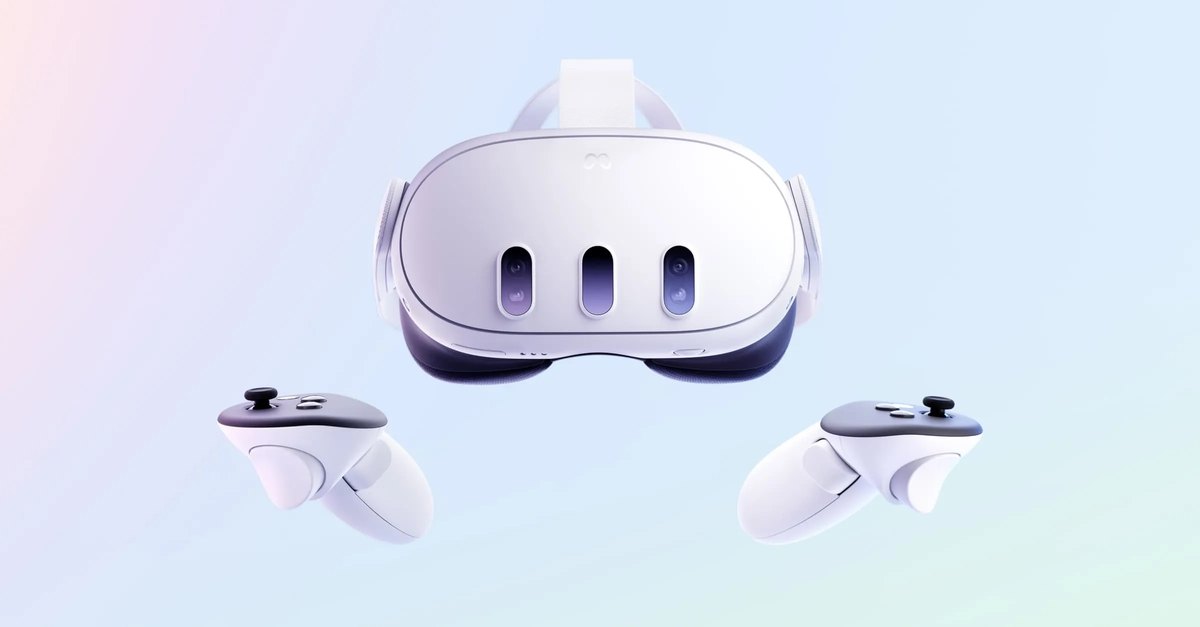
For setup on each headset, see how to watch movies in VR.
Route 2: a 3D file you already have, on a glasses-free monitor
The common format is side-by-side (SBS): both eyes' pictures in one frame, at full width or squeezed to half. On the Owl3D Shift this is Stereo 3D Playback:
- Play the file. Use your own media player, with the player's window on the Shift.
- Press Start. In the Owl3D app, open the Stereo 3D Playback tab and press Start.
- Watch in 3D. The Shift detects a full SBS, half SBS or top-bottom picture and shows it in 3D.
A side-by-side video on a web page works the same way. This needs less from the computer than converting does. On AMD and Intel graphics it works in fullscreen only.
Route 3: an ordinary 2D film or stream, converted as it plays
We found no major streaming service that sends studio 3D films to a monitor, TV or laptop (see 3D movies on streaming for each service and what could not be confirmed). Netflix has none at all: FlatpanelsHD reported in July 2024 that it "does not offer any content in 3D or other immersive formats" [26].
A glasses-free monitor can convert the 2D picture instead. On the Shift this is Live 3D Screen:
- Turn off hardware acceleration. For Netflix or another copy-protected service, open it in a web browser and turn off hardware acceleration (some browsers call it graphics acceleration) in the browser's settings. With it on, the picture can show as a black screen; Owl3D's tutorial video shows the setting.
- Drag the window onto the Shift. The Owl3D app converts the film to 3D instantly, as it plays, with no waiting and no file to prepare.
This is confirmed for streaming in a browser, not for a streaming service's own desktop app. A DVD or Blu-ray disc played in a player program on the computer is converted the same way, from the player's window. The result is depth estimated by AI from the 2D picture, not the studio's 3D version. Streaming services' terms of use still apply to how you watch. This is not legal advice.
For every option, glasses included, see how to watch 3D movies at home.
From Owl3DOwl3D ShiftA 14-inch glasses-free 3D display that sits beside your computer.Frequently asked questions
Can I watch 3D movies if I wear glasses? Can 3D glasses go over normal glasses?
Yes. 3D glasses only give each eye its own picture [12]. They do not correct your eyesight, so keep your prescription glasses or contact lenses on and wear the 3D pair over them. All About Vision, an eye-care publication, says many 3D glasses "are large enough to fit over your standard prescription glasses", though it calls two pairs cumbersome [27]. Dolby lists "Comfortable fit over prescription eyewear" as a feature of its theater 3D glasses [28].
With a glasses-free screen there is no second pair. The question is whether its eye-tracking camera still finds your eyes through your glasses. On the Owl3D Shift it does: people who wear prescription glasses can use it normally.
Can you see 3D movies with one eye?
Not the 3D effect. As Dominick Maino, a professor at the Illinois College of Optometry, put it: "When the brain puts two images together, that's when we get the 3-D effect" [29]. With one working eye there is nothing to combine. Through 3D glasses that eye receives one of the two pictures [12], so the film looks flat, not doubled. Glasses-free screens and headsets depend on two eyes in the same way.
Can people with bad eyesight see 3D movies?
It depends on the cause. If glasses or contacts correct your eyesight, wear them under the 3D glasses. The harder cases are problems with how the two eyes work together. The American Optometric Association estimated in 2010 that 3 million to 9 million people in the US have vision problems that keep them from enjoying 3D movies [29][30]. With amblyopia (lazy eye), for example, "the ability to see 3-D is greatly reduced or absent", Maino said [29].
For people with such problems, headaches, blurred vision and dizziness are the most common side effects of 3D movies, according to an association poll [29]. Difficulty seeing 3D can be a sign of a vision problem that may benefit from treatment, so see an eye doctor if 3D never works for you or leaves you feeling unwell [27].
Why were 3D TVs discontinued?
Too few buyers wanted 3D, and there was little to watch. Samsung, which stopped in 2016, cited "the limited consumer demand for 3D, and the small amount of content being produced in this format" [31]. Some viewers also "found that the technology gave them eye strain or headaches" [32]. No major brand has made a 3D TV since 2017. See 3D TVs in 2026 for what is left to buy.
Sources (32)
- Tridimensional, "ProMa Art 3D Display - 28" to 98" glasses-free MultiView" store listing. https://tridimensional.info/product/proma-3d-display-65-glasses-free-multiview/ (opened 2026-10-07)
- Tridimensional, "3DTVs are back!! and some are glasses-free Monsters...", November 24, 2022. https://tridimensional.info/blog/2022/3dtvs-are-back-and-some-are-monsters-at-least-if-you-have-the-money/ (opened 2026-10-07)
- Wikipedia, "Autostereoscopy". https://en.wikipedia.org/wiki/Autostereoscopy (opened 2026-10-07)
- Josh3D IRL, "I bought the CRAZIEST glasses free 4K 3D TV available!", YouTube video, April 10, 2024. https://www.youtube.com/watch?v=5VWU4ZIU81s (opened 2026-10-07)
- Samsung US, "27" Odyssey 3D G90XF 4K 165Hz Gaming Monitor" product page. https://www.samsung.com/us/monitors/gaming/27-inch-odyssey-3d-g90xf-4k-165hz-gaming-monitor-sku-ls27fg900xnxza/ (opened 2026-10-07)
- FlatpanelsHD, "Samsung develops 'breakthrough' glasses-free 3D OLED tech", by Rasmus Larsen, April 29, 2026. https://www.flatpanelshd.com/news.php?subaction=showfull&id=1777456862 (opened 2026-10-07)
- TechRadar, "I saw 2 next-gen 3D TVs without glasses that use a new tech that changes everything", January 19, 2026. https://www.techradar.com/televisions/i-saw-2-next-gen-3d-tvs-without-glasses-that-use-a-new-tech-that-changes-everything-heres-how-it-works (opened 2026-10-07)
- AVPasión, "TCL no da por muerto el 3D: presenta un panel 8K capaz de emitir en 4K 3D", by Ruben Teruel, September 7, 2026 (in Spanish). https://www.avpasion.com/tcl-resucitar-televisores-3d-nuevo-panel-65-8k/ (opened 2026-10-07)
- Cystar, Incergo and Visual Semiconductor, "Cystar, Incergo and Visual Semiconductor Collaborate on 65-Inch 8K GF3D Glasses-Free 3D Television", press release as carried by 01net, August 12, 2026. https://www.01net.it/cystar-incergo-and-visual-semiconductor-collaborate-on-65-inch-8k-gf3d-glasses-free-3d-television/ (opened 2026-10-07)
- TechCrunch, "Toshiba Japan Dates And Prices Its 55-Inch Naked-Eye 3D TV With 4K Resolution", by Serkan Toto, December 8, 2011. https://techcrunch.com/?p=465475 (opened 2026-10-07)
- IEEE Spectrum, "3-D Without Four Eyes", by Mark Ellis Harris, November 23, 2010. https://spectrum.ieee.org/3d-without-four-eyes (opened 2026-10-07)
- Wikipedia, "RealD 3D". https://en.wikipedia.org/wiki/RealD_3D (opened 2026-10-07)
- Wikipedia, "IMAX". https://en.wikipedia.org/wiki/IMAX (opened 2026-10-07)
- Wikipedia, "Dolby 3D". https://en.wikipedia.org/wiki/Dolby_3D (opened 2026-10-07)
- MIT News, "New movie screen allows for glasses-free 3-D at a larger scale", July 25, 2016. https://news.mit.edu/2016/glasses-free-3d-larger-scale-0725 (opened 2026-10-07)
- Amazon.com, "Acer Predator SpatialLabs 27" UHD Glasses Free 3D Gaming Monitor PSV27-2" listing. https://www.amazon.com/dp/B0FJS6SBNK (opened 2026-10-07)
- Meta, "An Update on Meta Quest Pricing", April 16, 2026. https://www.meta.com/blog/update-meta-quest-pricing/ (opened 2026-10-07)
- Apple Newsroom, "Apple Vision Pro upgraded with the M5 chip and Dual Knit Band", October 15, 2025. https://www.apple.com/newsroom/2025/10/apple-vision-pro-upgraded-with-the-m5-chip-and-dual-knit-band/ (opened 2026-10-07)
- Looking Glass Factory store, "Looking Glass Go". https://checkout.lookingglassfactory.com/products/looking-glass-go (opened 2026-10-07)
- Wikipedia, "Nintendo 3DS". https://en.wikipedia.org/wiki/Nintendo_3DS (opened 2026-10-07)
- Lenovo StoryHub, "Forge Tomorrow: The New Lenovo Legion 9i (18", 10) Brings Games to Life for Gamers and Developers from Vision to Victory", press release, May 8, 2025. https://news.lenovo.com/?p=31076 (opened 2026-10-07)
- Acer, "Acer Expands SpatialLabs Stereoscopic 3D Portfolio with New Laptop and Gaming Monitor", press release, January 7, 2024. https://news.acer.com/acer-expands-spatiallabs-stereoscopic-3d-portfolio-with-new-laptop-and-gaming-monitor (opened 2026-10-07)
- Tech Advisor, "ZTE's new 3D tablet is a curiosity you shouldn't buy", by Henry Burrell, April 25, 2023. https://www.techadvisor.com/article/1797464/zte-nubia-3d-tablet.html (opened 2026-10-07)
- Wikipedia, "Stereoscopy" (section on freeviewing). https://en.wikipedia.org/wiki/Stereoscopy (opened 2026-10-07)
- Meta, "Introducing Meta VR Glasses, A New Era for Virtual Reality", September 23, 2026. https://www.meta.com/blog/meta-vr-glasses-announcement-meta-connect/ (opened 2026-10-07)
- FlatpanelsHD, "Netflix app to be removed from Meta Quest VR headsets", July 4, 2024. https://www.flatpanelshd.com/news.php?id=1720072191&subaction=showfull (opened 2026-10-07)
- All About Vision, "3D glasses: A brief guide", by Rob Woods, March 2, 2021. https://www.allaboutvision.com/eyewear/specialty/3d-glasses/ (opened 2026-10-07)
- Dolby Laboratories, "Dolby 3D" product sheet, March 1, 2019. https://professional.dolby.com/siteassets/products/dolby-imaging-solutions-for-media/dolby-3d/dolby_3d_product_sheet.pdf (opened 2026-10-07)
- HealthDay, "Vision Problems Can Rob Movie-Goers of 3-D", by Dennis Thompson, September 21, 2010. https://www.healthday.com/health-news/eye-care/vision-problems-can-rob-movie-goers-of-3-d-641069.html (opened 2026-10-07)
- Optometry Times, "Clinical answers for improving a patient's 3D viewing experience", May 1, 2013. https://optometrytimes.com/view/clinical-answers-improving-patients-3d-viewing-experience (opened 2026-10-07)
- Ubergizmo, "Samsung And Philips Will Not Be Making Any 3D TVs For 2016", by Tyler Lee, March 9, 2016, quoting Samsung's statement to Forbes. https://www.ubergizmo.com/2016/03/samsung-philips-no-3d-tvs-2016/ (opened 2026-10-07)
- IEEE Spectrum, "3-D TV is Officially Dead (For Now) and This is Why it Failed", by Stephen Cass, January 7, 2014. https://spectrum.ieee.org/3d-tv-is-officially-dead-for-now-and-this-is-why-it-failed (opened 2026-10-07)