What Is a Light Field Display? Glasses-Free 3D Names Explained
How we researched this: written by Owl3D from published sources, all 16 listed at the end.
Short answer
A light field display is a glasses-free 3D screen that sends many views of a scene in different directions at once, so you see depth and the picture changes as you move your head [2]. Researchers say these screens only approximate a real light field, and that calling them light field displays "can be considered controversial" [2]. Looking Glass is the example the review gives: up to 100 views over a cone about 58° wide, for a group of viewers [2][7][8]. All glasses-free screens are "autostereoscopic" [3]. The other main kind aims just two views at one viewer's eyes, which a camera tracks [3][9]. Owl3D, the publisher of this guide, makes the Shift, one of the eye-tracked screens named below.
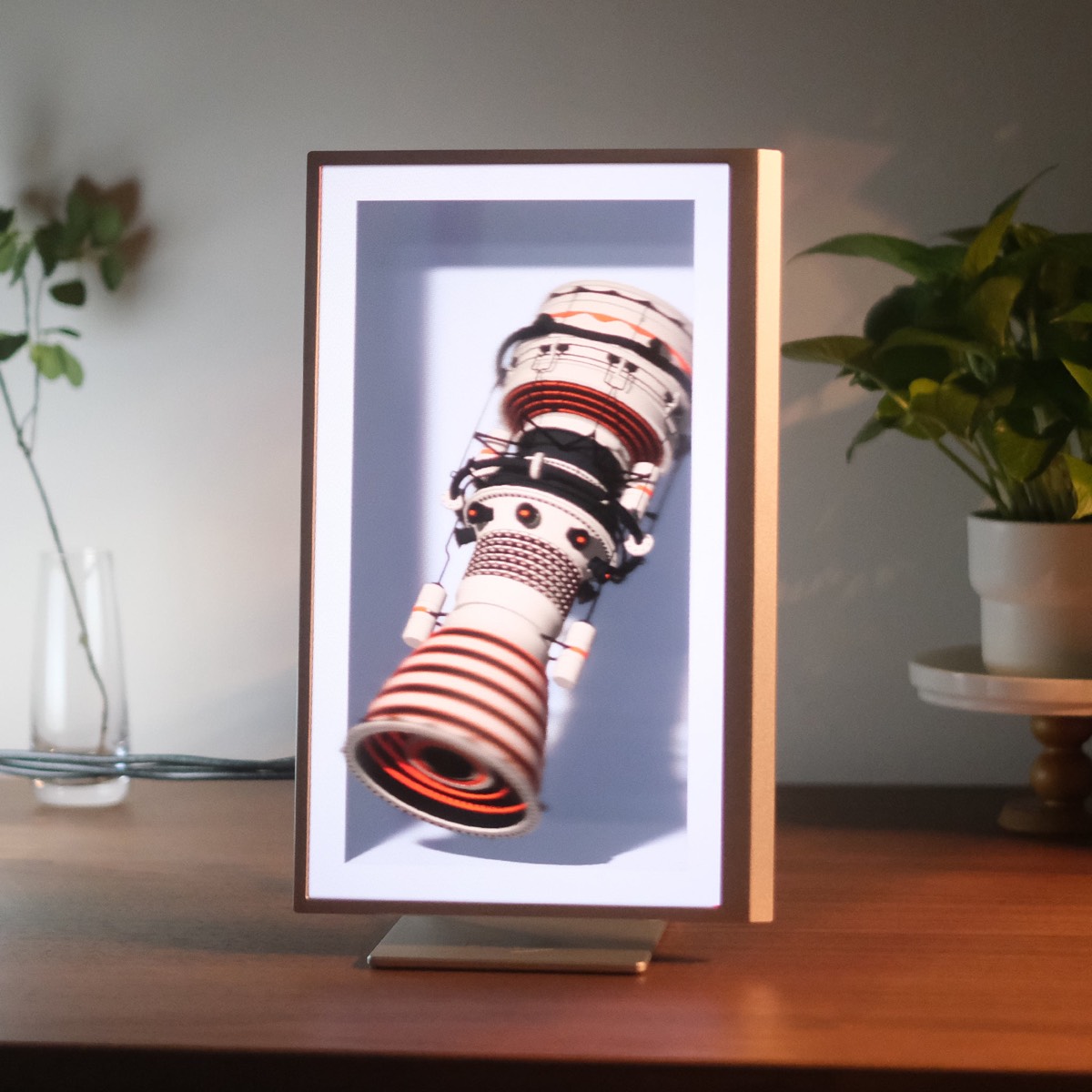
A Looking Glass 16-inch Light Field Display, a multi-view screen with no eye tracking. Image: Looking Glass. Looking Glass has no part in this guide.
Key takeaways
- "Autostereoscopic" and "glasses-free 3D" mean the same thing: 3D with no glasses or headgear [3]. Light field, lenticular, parallax barrier and eye-tracked screens are all kinds of it; see the names side by side.
- A light field (multi-view) screen shows depth to several people at once, but each eye sees several views, which blurs whatever sits in front of or behind its sharpest depth [7]; see how it works.
- An eye-tracked screen sends two views to one person's eyes. You get more sharpness, but only one viewer sees the 3D [3][6][9]; see eye-tracked screens.
- Makers use "light field" loosely. Samsung uses it for its eye-tracked lenticular monitor [11]; see is it a marketing name.
- A light field screen is not a hologram in the physics sense: it shows views, not rebuilt light waves; see light field vs hologram.
What a light field display is
In physics, a light field is the light "flowing in every direction through every point" in a space [1]. A screen that could send each of those rays the right way would look like the real scene, with no glasses [1].
Real screens get near that by sending many separate views. A 2021 review of 3D displays calls these "Super-Multi-View" screens: multi-view displays "with a large number of views that produce continuous motion parallax" [2]. Motion parallax means the scene shifts as you move your head, as a real object would. The same review says some researchers named them light field displays, and that the name is debated because they "are only approximating a light field" [2]. Its example is the Looking Glass display [2].
Samsung's own definition is simpler: "A Light Field Display presents different images depending on the viewing angle" [13].
The names for glasses-free 3D, side by side
Every screen below is autostereoscopic, which is the umbrella word for 3D without glasses or headgear [3]. There are two broad approaches: many views, so the screen need not find your eyes, or eye tracking [3]. The other names describe the optics that split the views: a lens sheet or a barrier [3].
| Name | How it makes 3D | Viewers | Examples |
|---|---|---|---|
| Light field / super multi-view | Many views in fixed directions; depth shifts as you move [2] | Several at once [8] | Looking Glass: up to 100 views [7] |
| Multi-view lenticular | A lens sheet sends several views to fixed zones; 8 or 16 views are typical [3] | Several, though there may be dead zones [3] | See lenticular lens |
| Eye-tracked stereo | Lenses send two views to where a camera finds your eyes [3][9] | One [3][9] | Sony Spatial Reality Display, Samsung Odyssey 3D, ASUS Spatial Vision, Acer SpatialLabs, Owl3D Shift [9][12][14][15][16] |
| Parallax barrier | A layer in front of the panel lets each eye see only its own pixels [3][4] | Fixed zones, which may have dead zones [3] | Nintendo 3DS top screen [5] |
| "Holographic" | A word makers use: Looking Glass calls its views "holograms" [7] | Depends on the screen | See light field vs hologram |
You may also see "automultiscopic", a shorter name for a multi-view autostereoscopic display [3], and "Spatial Reality Display", Sony's product name for its eye-tracked screen [9].
How a light field display works
A light field screen sends its views over a fan in front of it, and each position in that fan sees a different one. Looking Glass describes "up to 100 discrete views of a 3D scene" over "a view cone roughly 58° wide" [7]. You get depth in two ways: each eye sees a different view, and the view changes as you move your head [7]. Nothing tracks you, so several people can watch: Looking Glass calls its screens "group viewable" [8].
The cost is sharpness. On a Looking Glass, "each eye actually sees many views, not just one view", and "The downside is that it introduces blur" [7]. Things look sharpest at one depth, the "Zero-Parallax Plane" [7]. Most multi-view screens also react only to sideways movement: by Sony's survey, "The view changes in response to side-to-side head movement only" [9]. Sony puts the trade in numbers: with 45 views, each viewer "typically sees 2/45 of the display's native resolution" [9]. A 2022 review lists the common problems of such screens as "a limited field of view (FOV), severe resolution degradation, and visual fatigue" [6].
Looking Glass also sells a newer line, Hololuminescent Displays (HLD). The company says they are "2D displays with a fixed holographic background" and "different than our 3D light field technology" [8]. For its products and prices, see Looking Glass display.
How an eye-tracked screen works
An eye-tracked screen sends only two views, one per eye, and steers them to where a camera finds your eyes [3]. Sony's display shows "independent left- and right-eye images, each with about half the pixels", through "A micro optical lens in front of the LCD panel" [9]. A camera in the bezel follows your head "with six degrees of freedom" [9]. Samsung builds its Odyssey 3D from "eye tracking, view mapping and a lenticular lens", with "a stereo camera mounted at the top of the monitor" [12]. ASUS describes a lenticular lens layer and dual cameras that find each of your eyes [14]. Acer combines eye tracking with a stereoscopic 3D display [15].
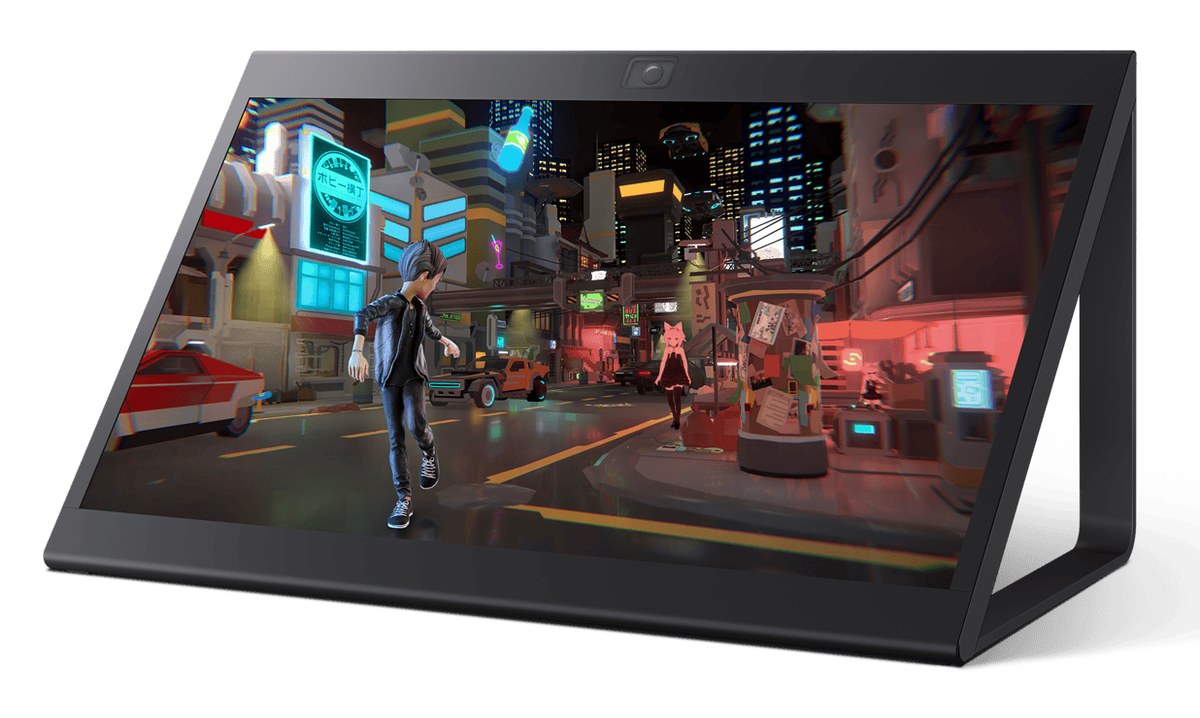
The trade is the viewer count. Tracking "limits the display to a single viewer" [3]. In Sony's words: "While Sony's Spatial Reality Display serves one user at a time, multi-view 3D monitors can serve several users simultaneously" [9]. The 2022 review says eye tracking gives "both high spatial resolution and angular resolution for single-user applications" [6].
Two ways a glasses-free screen aims its views
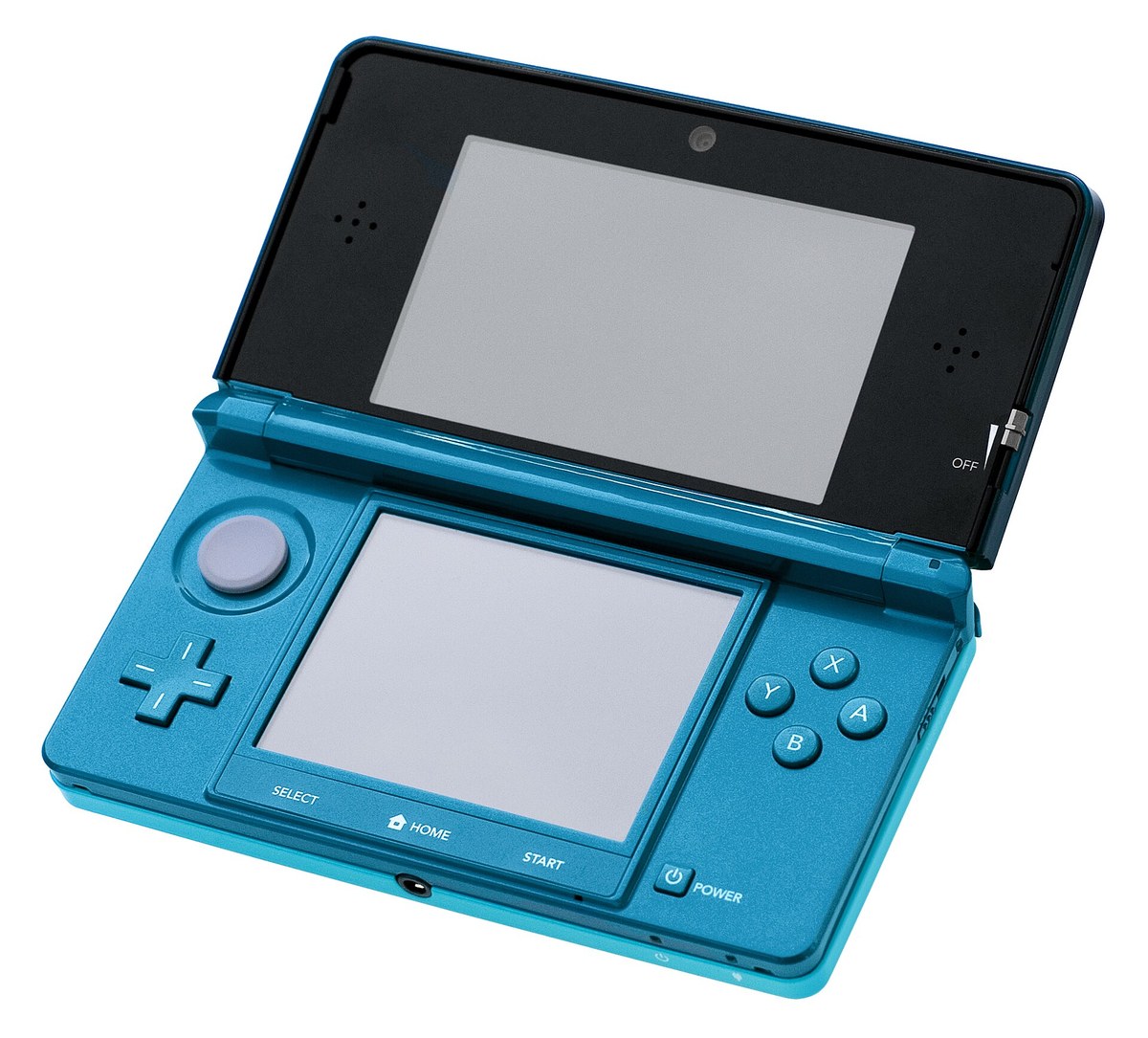
A parallax barrier is the other way to aim views, with no lenses. A barrier placed in front of the panel lets it show a stereoscopic image without glasses [3], and each eye sees half the horizontal pixels [4]. The Nintendo 3DS uses one: its top screen is 800 × 240 pixels, 400 × 240 per eye [5].
For lens against barrier in more depth, see lenticular lens.
Is "light field display" a marketing name?
Partly. Makers use it for more than one design. Samsung says its Odyssey 3D uses "light field display (LFD) technology" with "a lenticular lens" [11]. That monitor finds your eyes with a stereo camera [12]. In an April 2026 note on its research with POSTECH, Samsung says conventional light field displays face "narrow viewing angles (around 15 degrees), reduced resolution and reliance on real-time eye tracking" [13].
So the label alone does not tell you how a screen works. Ask two questions instead: how many people see the 3D at once, and does it track your eyes? A screen for a group does not track you [3][8]. A screen that tracks your eyes is for one viewer [3][9].
Light field vs hologram
Holography is one of the non-digital ways to show a light field [1]. Holographic and volumetric displays also count as autostereoscopic [3]. The screens sold as "holographic" today work differently: Looking Glass produces what it calls "holograms" from up to 100 discrete views [7]. They show views, not rebuilt light waves. For what a hologram is and what gets called one, see what is a hologram.
Which kind fits what you want
- A group looking at one 3D object or scene: a multi-view light field screen, which needs no tracking [8]. Looking Glass's light field line is made "For advanced 3D visualization, interaction, and research using fully 3D content pipelines" [8].
- One person at a desk who wants the sharpest 3D: an eye-tracked screen. Acer's plays "side-by-side videos", streams YouTube and converts "any 2D content" into 3D in real time [15]. Sony's display works with game engines that turn the scene as you move your head [9].
- Models and prices on sale: see glasses-free 3D monitors compared, Samsung Odyssey 3D and Sony Spatial Reality Display.
Our Owl3D Shift is an eye-tracked screen: "a layer of cylindrical lenses directly into a 4K panel", combined with eye tracking [16]. In 3D it shows 1920 × 2160 pixels, and one person sees the 3D at a time [16]. You watch from about 45 to 100 cm away [16]. The Owl3D app converts 2D to 3D in real time on your computer, so movies, YouTube, games and photos show in 3D instantly [16]. That is an AI conversion, not a studio's 3D version. Half-SBS, Top-Bottom and Full-SBS files play as they are [16].
FAQ
Is a light field display the same as autostereoscopic?
A light field display is one kind of autostereoscopic display. Autostereoscopic covers every screen that shows 3D without glasses [3], including eye-tracked and parallax barrier screens.
Is a Looking Glass a hologram?
Not in the physics sense. It sends up to 100 views over a cone about 58° wide [7], and Looking Glass calls the result "holograms" [7]. See what is a hologram.
Can several people watch a glasses-free 3D screen at once?
On a multi-view light field screen, yes [8]. On an eye-tracked screen, one person sees the 3D [3][9]. Sony's 27-inch ELF-SR2 lets two people "alternate viewing" [10].
Why do glasses-free 3D screens look less sharp?
The panel's pixels are shared between views. With a parallax barrier each eye sees half the horizontal pixels [4]. On a multi-view screen with 45 views, each viewer sees about 2/45 of the native resolution, by Sony's figures [9].
Is the Nintendo 3DS a light field display?
No. Its top screen is a two-view parallax barrier screen [5].
Sources (16)
- Wikipedia, "Light field". https://en.wikipedia.org/wiki/Light_field Opened 2026-11-11.
- Pan et al., "3D Displays: Their Evolution, Inherent Challenges & Future Perspectives", arXiv 2105.08390, submitted May 18, 2021 (full text on ar5iv). https://ar5iv.labs.arxiv.org/html/2105.08390 Opened 2026-11-11.
- Wikipedia, "Autostereoscopy". https://en.wikipedia.org/wiki/Autostereoscopy Opened 2026-11-11.
- Wikipedia, "Parallax barrier". https://en.wikipedia.org/wiki/Parallax_barrier Opened 2026-11-11.
- Wikipedia, "Nintendo 3DS". https://en.wikipedia.org/wiki/Nintendo_3DS Opened 2026-11-11.
- "Recent Advances in Planar Optics-Based Glasses-Free 3D Displays", Frontiers in Nanotechnology, Volume 4, 2022. https://www.frontiersin.org/articles/10.3389/fnano.2022.829011/full Opened 2026-11-11.
- Looking Glass documentation, "How does Looking Glass Work?". https://lfdocs.lookingglassfactory.com/keyconcepts/how-it-works Opened 2026-11-11.
- Looking Glass, "Our technology". https://lookingglassfactory.com/how-it-works Opened 2026-11-11.
- Sony, Spatial Reality Display white paper, "Technical Background", last updated January 28, 2026. https://xyn.sony.net/en/developer/technical/spatial-reality-display/whitepaper Opened 2026-11-11.
- Sony, ELF-SR2 Spatial Reality Display (pro.sony). https://pro.sony/ue_US/products/spatial-reality-displays/elf-sr2 Opened 2026-11-11.
- Samsung Newsroom UK, Odyssey 3D unveiled at Gamescom 2024. https://news.samsung.com/uk/samsung-electronics-unveils-groundbreaking-glasses-free-odyssey-3d-gaming-monitor-at-gamescom-2024 Opened 2026-11-11.
- Samsung Global Newsroom, interview on the Odyssey 3D, May 12, 2025. https://news.samsung.com/global/interview-transforming-the-monitor-experience-expanding-the-boundaries-with-odyssey-3d Opened 2026-11-11.
- Samsung Global Newsroom, Samsung and POSTECH 2D-3D switchable display research in Nature, April 23, 2026. https://news.samsung.com/global/samsung-and-postech-publish-2d-3d-switchable-display-research-in-nature Opened 2026-11-11.
- ASUS, "ASUS Spatial Vision technology" (Philippines page). https://www.asus.com/ph/content/asus-spatial-vision-technology/ Opened 2026-11-11.
- Acer, SpatialLabs. https://www.acer.com/us-en/spatiallabs Opened 2026-11-11.
- Owl3D, Owl3D Shift. https://www.owl3d.com/shift Opened 2026-11-11.